Transfer of money and data to execute these transactions electronically
Sale of physical products through internet platform / apps
Any commercial transaction that is facilitated through the internet
Ecommerce history and development
First ever online sale: August 11, 1994 a man sold a CD by the band Sting to his friend through his website NetMarket, an American retail platform.
Ecommerce has changed: how to promote, influence or attract customers, and sell products.
Buyers see products with new perspectives and the way they shop is changing.
Ecommerce is no longer limited to web platforms, lots shopping apps are introduced into ecommerce.
Ecommerce history and development
Mobile shopping apps have become new marketplaces that are at customers’ fingertips: Taobao, eBay, Amazon, Costco, Walmart, uber, aliexpress.
Mobile apps change to e-commerce:
New marketplaces
Mobile-friendly shopping
New horizons in advertising and marketing
Ecommerce History and development
New marketplaces, new devices, new facility, new business operations.
Amazon initiated online shopping in 2001, it has continued to innovate in the e-commerce market, even most recently with its drone delivery services.
It is estimated that U.S. sales will reach around $434 billion for the year 2017.
Global sales of retail ecommerce are projected to reach $27 trillion by 2020.
It is estimated 27.2 percent of the world’s population shops online.
Ecommerce Model
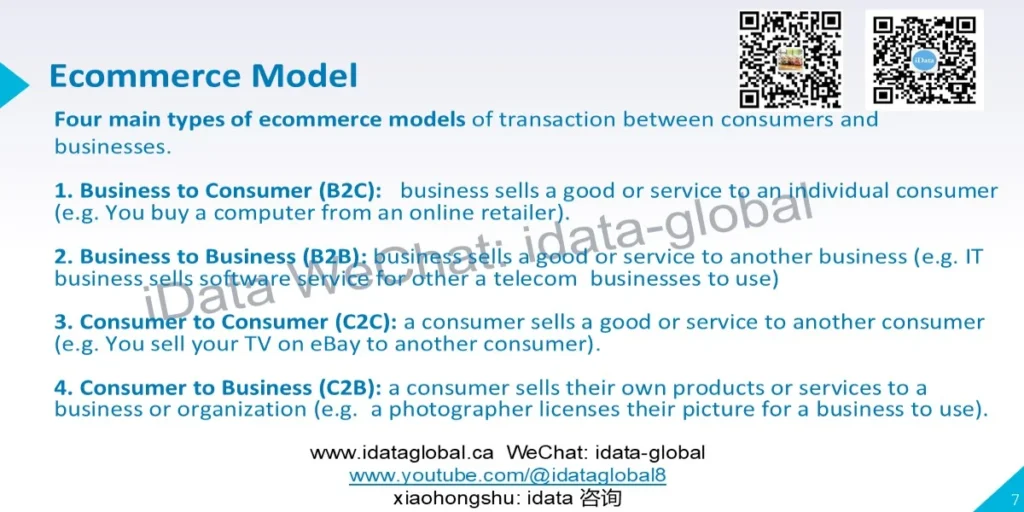
Four main types of ecommerce models of transaction between consumers and businesses.
Business to Consumer (B2C): business sells a good or service to an individual consumer (e.g. You buy a computer from an online retailer).
Business to Business (B2B): business sells a good or service to another business (e.g. IT business sells software service for other a telecom businesses to use).
Consumer to Consumer (C2C): a consumer sells a good or service to another consumer (e.g. You sell your TV on eBay to another consumer).
Consumer to Business (C2B): a consumer sells their own products or services to a business or organization (e.g. a photographer licenses their picture for a business to use).
Ecommerce System
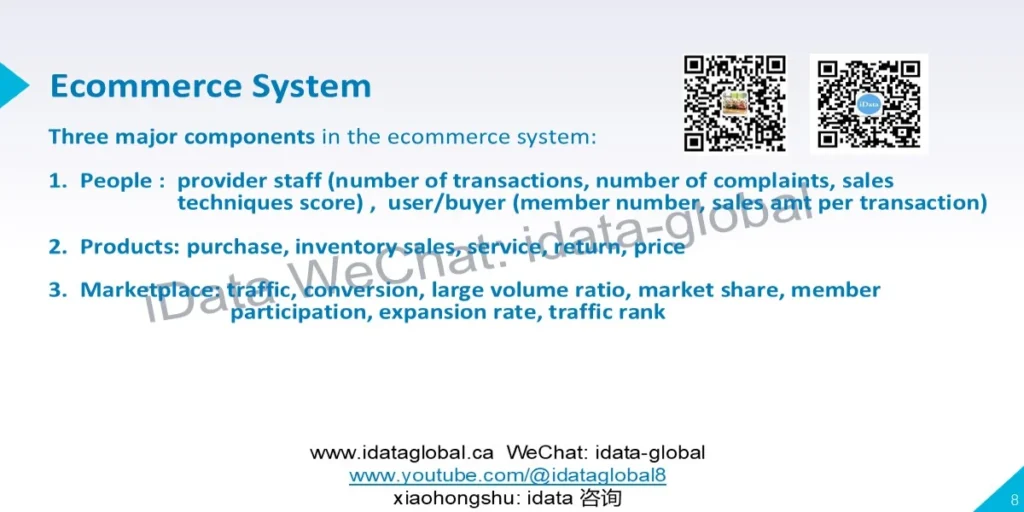
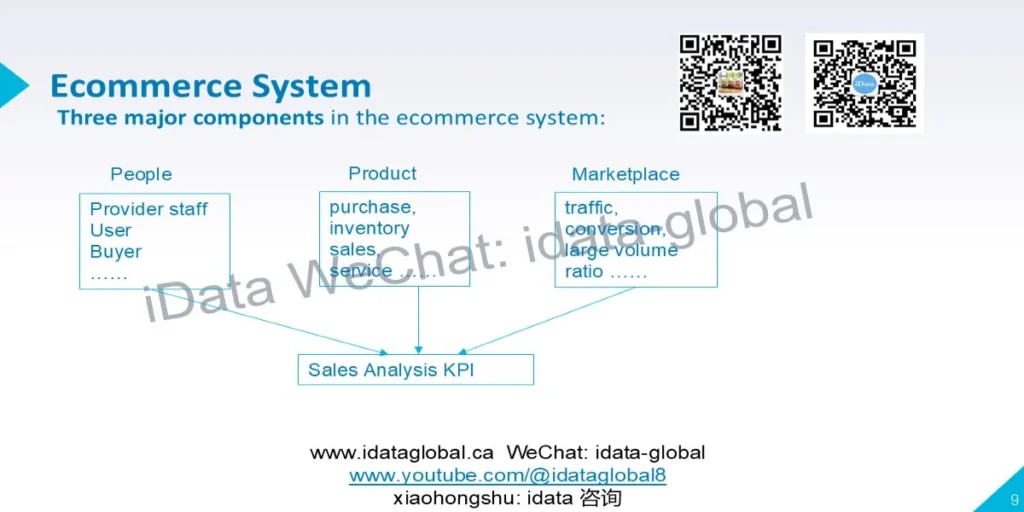
Three major components in the ecommerce system:
People: provider staff (number of transactions, number of complaints, sales techniques score), user/buyer (member number, sales amt per transaction).